


Australia’s “participation” sports market: key characteristics and issues
What are the defining features of Australia’s sports market? Sport can broadly be divided into “participation” and “spectatorship”. The former includes fitness clubs and amateur sports, while professional sport falls largely into the latter. Given that this paper discusses sport in the context of healthcare, the focus here is on participatory sports.
Australia is widely recognized as a sporting nation, supported by its natural environment and climate. In everyday life, it is common to see people running or walking from early morning through to the evening. Beaches are filled with people enjoying surfing, yachting, diving and other marine sports. Sports such as rugby, Australian rules football, cricket, and netball are also very popular. There are many local sports clubs that function as community hubs for social interaction. In addition, sports-related education is well developed: the University of Queensland and the University of Sydney were ranked second and third respectively in the sports-related category by QS World University Rankings in 2026.(*1)
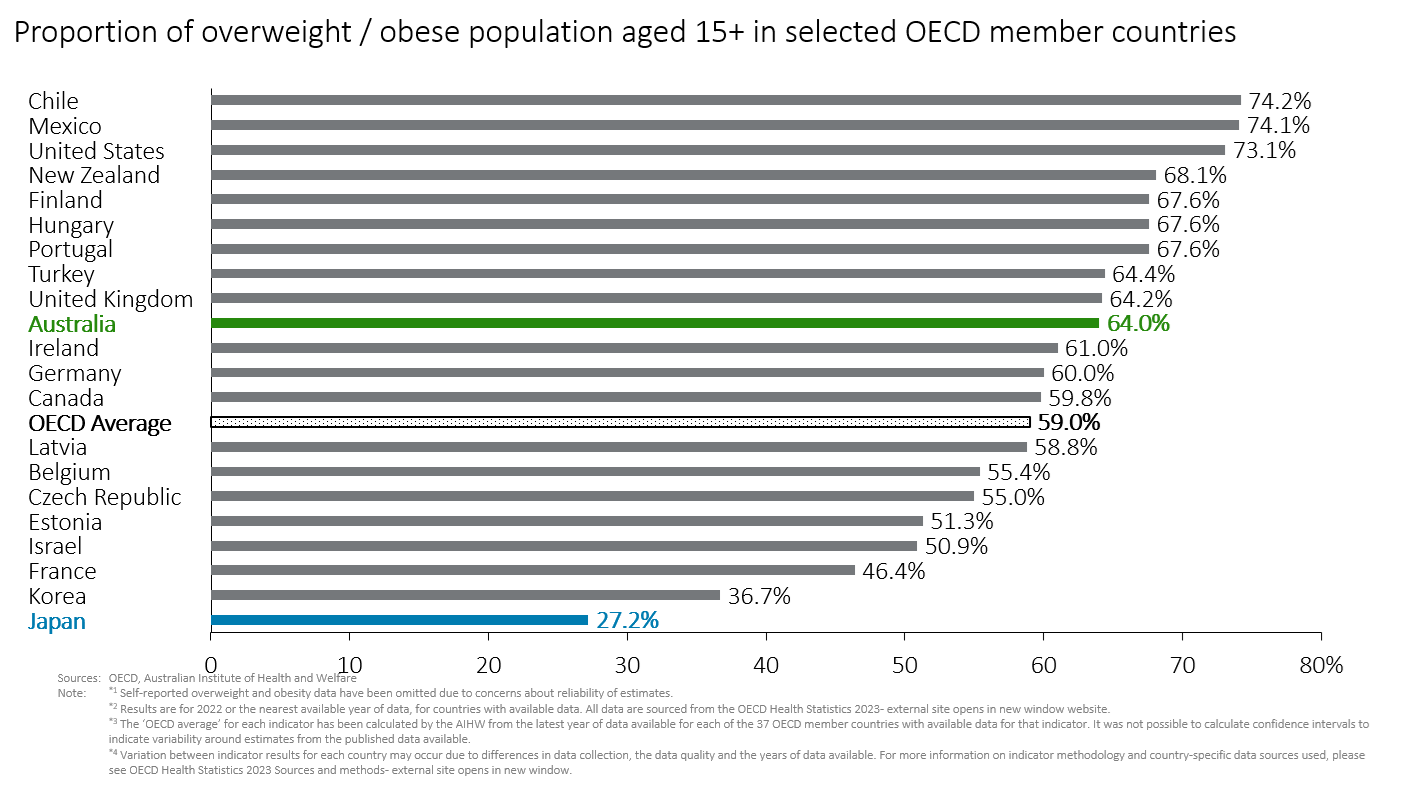
Figure 1
From the above, it would be natural to assume that Australia’s strong sporting culture translates into healthier lifestyles. However, statistics reveal an entirely different reality. An estimated 65% of the population aged 15 and above (2022) is overweight or obese.(*2) For reference, the Organization of Economic Co-Operation and Development (OECD) average is 59%, while Japan stands at 27%—highlighting how elevated Australia’s figure is (Figure 1). Why does this occur?
Insufficient physical activity
It is widely recognized that the primary causes of overweight and obesity are insufficient physical activity and excessive or unbalanced nutrition. The Australian Government similarly considers environmental factors to be significant—such as the prevalence of energy-dense processed foods and lifestyles that reduce opportunities to be active (e.g., desk-based work and car-centric mobility).(*3) In practice, examples that support these factors are visible everywhere: fast-food outlets are widespread, while supermarkets and convenience stores are stocked with frozen and instant foods. In addition, close to 70% of domestic employment (2020) is in so-called white-collar roles,(*4) limiting opportunities for physical activity through work. Outside a limited set of inner-city areas with well-developed public transport, mobility is primarily car-based.
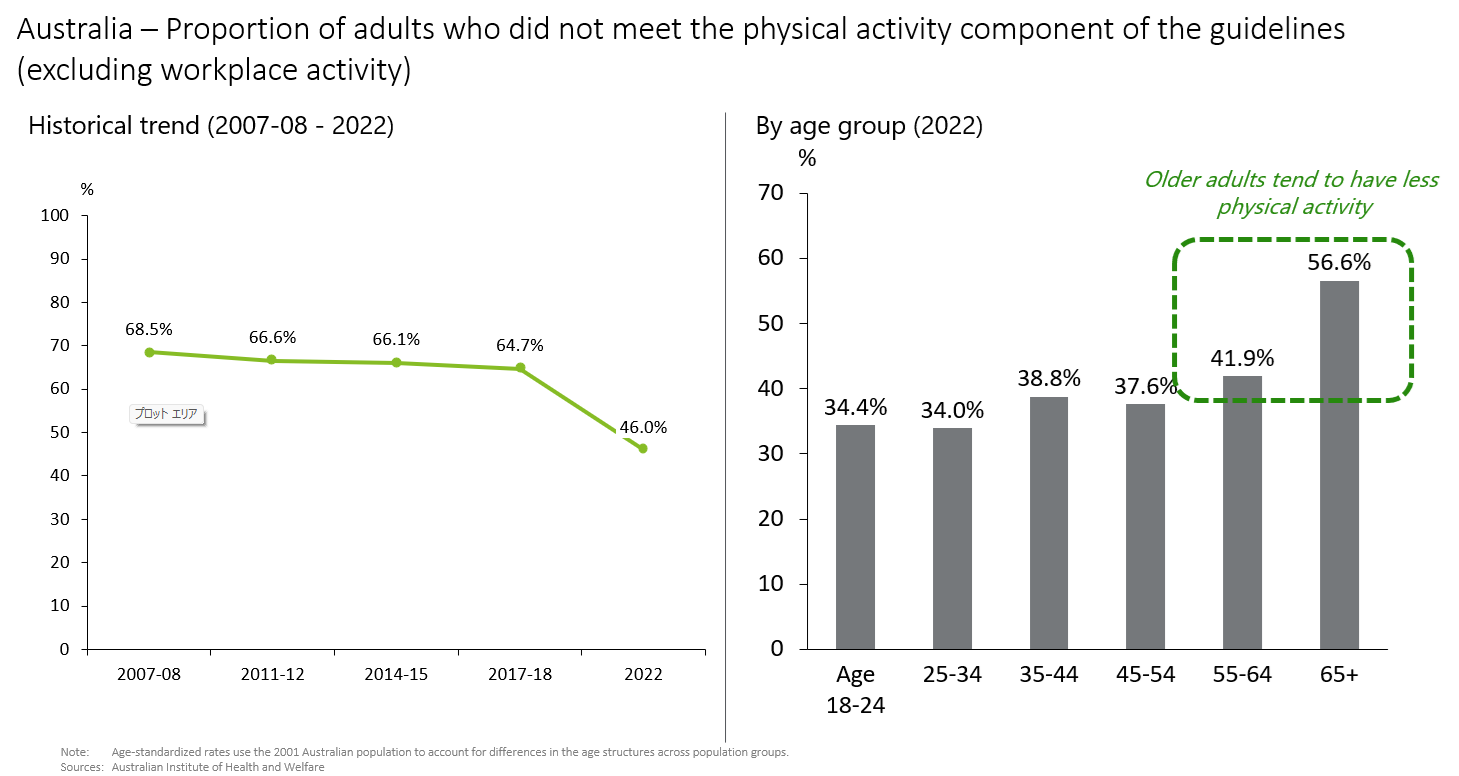
Figure 2
Let us look more closely at insufficient physical activity, a major contributor to overweight and obesity. In 2022, 46.0% of the population aged 18 and above did not meet the Australian Government’s recommended activity guidelines. Although this represents an improvement—reflecting heightened health awareness during the COVID-19 pandemic—previous figures exceeded 60%. By age cohort, the share of people with insufficient activity rises with age; among those aged 65 and above, more than half (56.6%) are insufficiently active (Figure 2). Why does activity fall as people get older? Survey results indicate that “aging” and “poor health / injury” are the top two reasons for not exercising, with the former cited by around half of respondents aged 65 and above. In other words, many stop because they feel their bodies can no longer tolerate exercise—an intuitive conclusion.
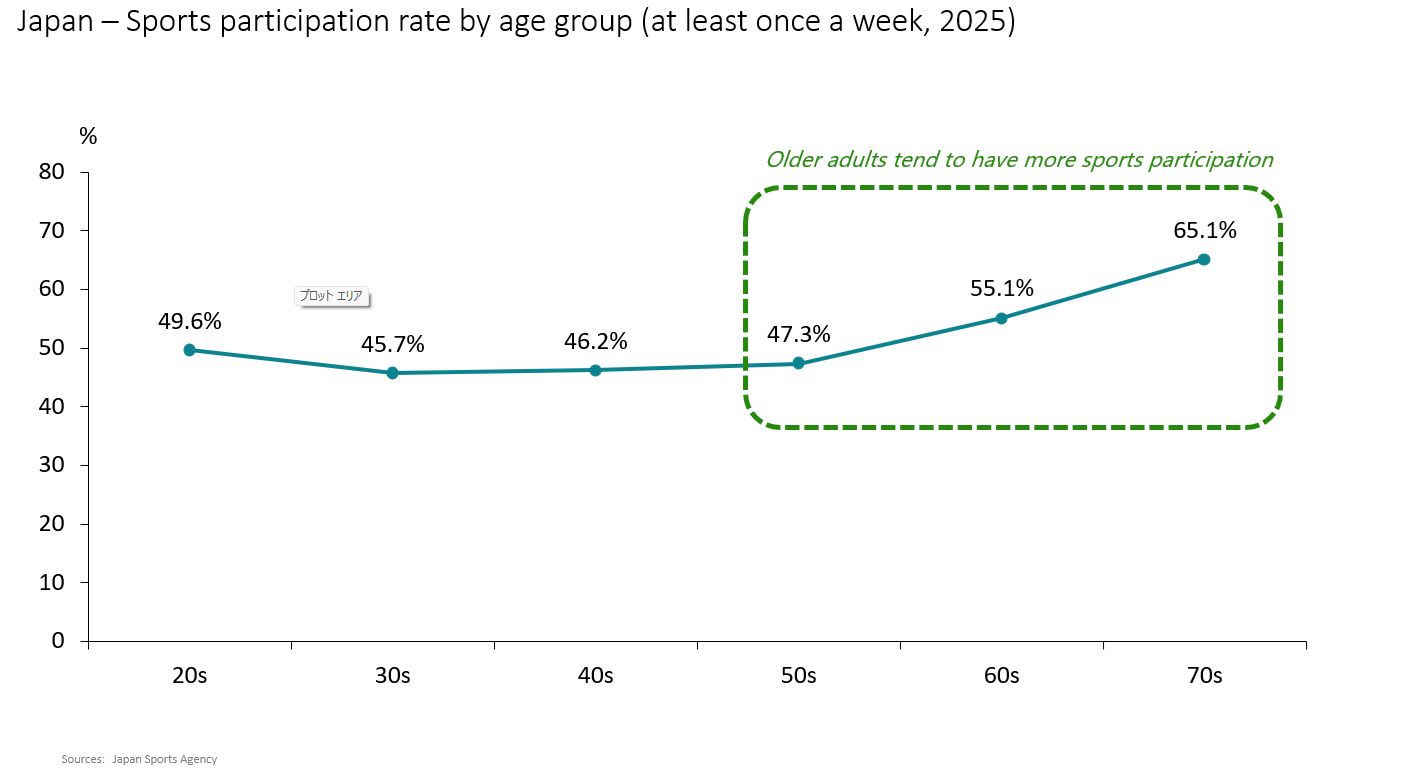
Figure 3
How does Japan compare? Interestingly, Japan exhibits the opposite pattern. According to a survey by the Japan Sports Agency, the national sports participation rate (at least once per week) begins to rise after bottoming out among people in their 30s and 40s, and it peaks in the 70s age group (Figure 3. Note that the Australian and Japanese indicators are not perfectly aligned.) Why? Deloitte Tohmatsu team has examined this background previously; in summary, the following dynamics tend to apply.
In Japan, there are abundant, quasi-mandatory opportunities for physical activity during childhood and youth, such as swimming lessons, school club activities in junior high and high school, and university clubs. However, these environments disappear once individuals enter the workforce. Young professionals often experience a sharp reduction in discretionary time, and health concerns are not yet prominent, leading many to step away from exercise. Later, as people enter middle age, less favorable health check results or difficulties maintaining body shape gradually prompt a return to exercise. Upon retirement, increased time availability allows many to engage in exercise frequently and habitually.
If you have visited sports clubs / fitness gyms in Japan, you may recognize this pattern: excluding junior cohorts attending swimming classes and similar activities, younger people tend to be under-represented, while middle-aged and older cohorts make up a substantial share. While it is an issue that working-age adults—particularly those in their 30s and 40s—move away from exercise, the fact that older cohorts actively exercise can be viewed positively from the standpoint of extending healthy life expectancy.
Impact of a major international sporting event
Taking Japan’s experience into account, it becomes clear that even in Australia—where many people disengage from exercise due to aging—there is room to improve exercise habits by promoting forms of activity that are sustainable and manageable. Australia’s national healthcare expenditure as a percentage of Gross Domestic Product (GDP) has risen significantly from 8.8% in 2013 to 10.4%, surpassing the OECD average of 9.3% and approaching Japan’s level of 10.7% in 2023, where population aging is already more advanced. (*5)Cost containment is therefore becoming increasingly urgent. Even if people cannot exercise as they did when they were younger, the widespread adoption of moderate, sustainable physical activity among middle-aged and older populations could have a major impact from a prevention and pre-disease (early intervention) perspective. The key question is: what levers can shift exercise habits upward?
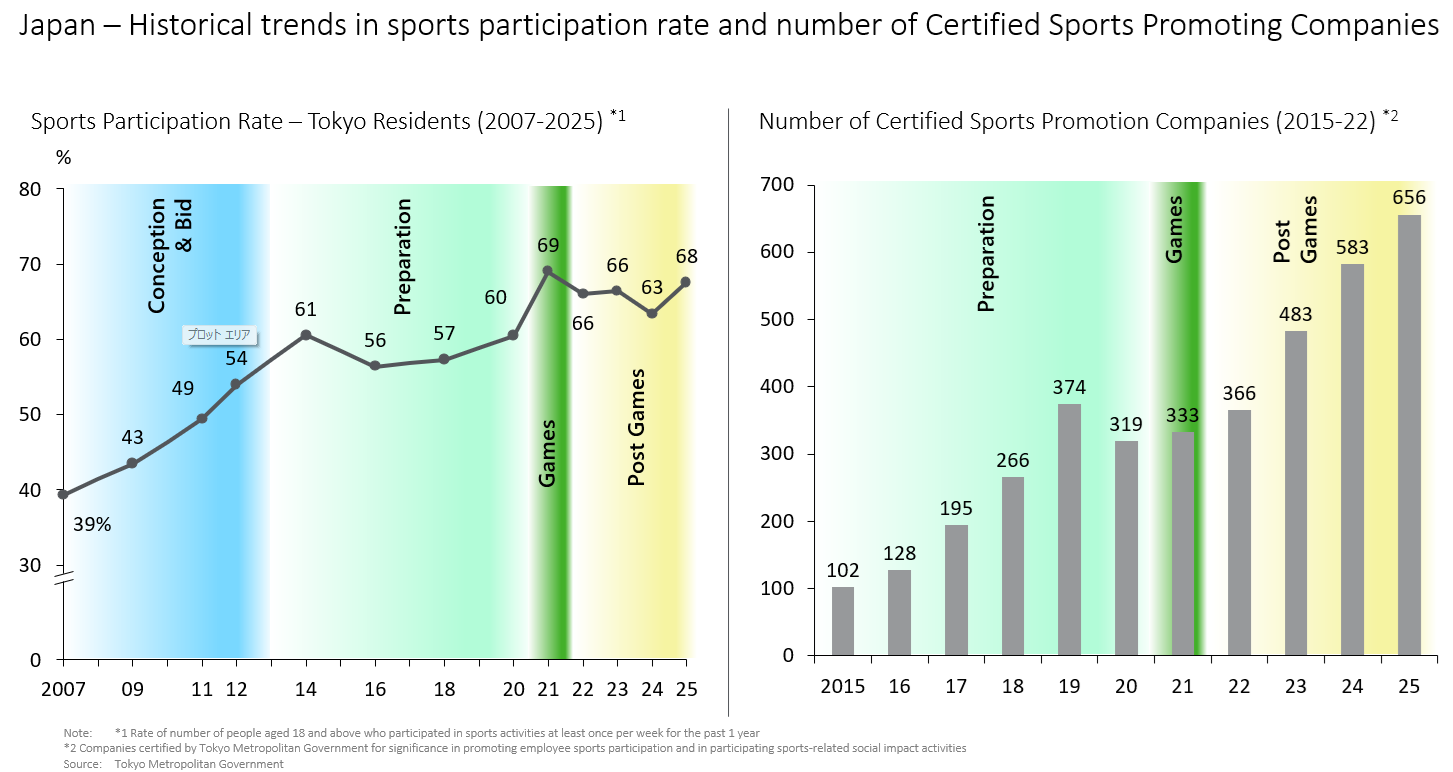
Figure 4
Based on what occurred around 2021 in Tokyo, the event in Brisbane in 2032 could serve as a similar catalyst. According to the Tokyo Metropolitan Government, the sports participation rate among people aged 18 and above (at least once per week) rose significantly from 39% (2007, during the bid phase) to 68% (2025, post-Games). In addition, the number of “Certified Sports Promotion Companies” certified for actions in encouraging employee and community to participate sport also increased markedly—both viewed as key legacies of the Games.(*6) This can be interpreted as the result of broad-based initiatives at both metropolitan and national levels. Moreover, the Games likely made sport feel more accessible, which may have had a material additional effect (Figure 4).
In Japan, sport has historically developed as “Dō” (a disciplined path for cultivating the mind). Even after Western sports were introduced in the modern era, sport remained closely linked to the concept of Dō and was practiced strongly as part of “education”. Notably, the Japan Sports Agency established in 2015 is positioned as an external bureau of the Ministry of Education, Culture, Sports, Science and Technology. As a result, sports were often perceived as inherently strenuous, with growth achieved through enduring hardship.
However, during the Games in Tokyo, young athletes competed joyfully while still delivering outstanding results. Even when they fell short, many openly praised their rivals’ performances with genuine smiles—images that were widely broadcast and resonated strongly with the public. Skateboarding, in which teenage athletes excelled, is a particularly striking example.
This contributed to a paradigm shift: sports came to be seen not as something that must be endured through suffering, but as something that can be enjoyed casually. Such a shift likely helped support the increase in sports participation.
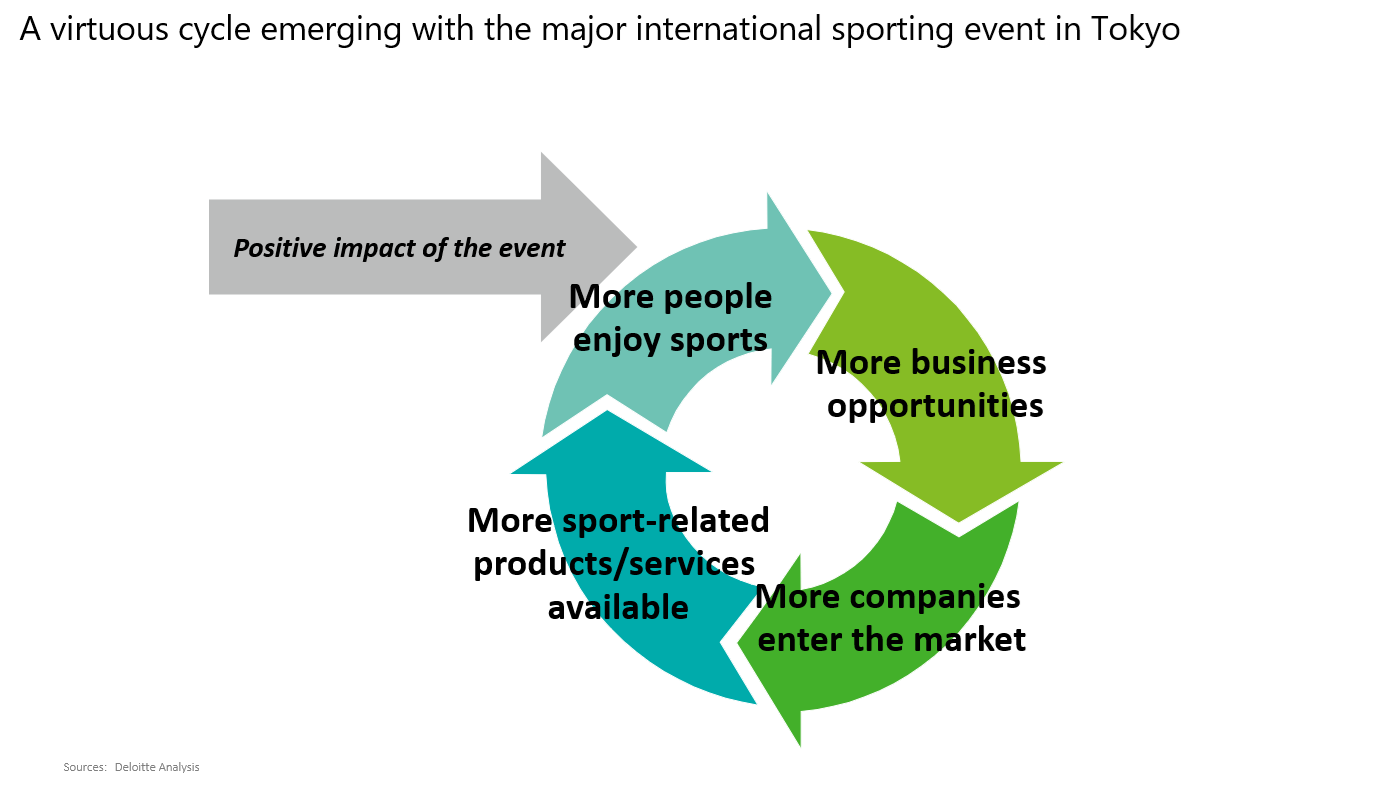
Figure 5
Rising sports participation also has positive effects on industry. Around the time of the Games in Tokyo, Deloitte Tohmatsu saw an increase in engagements related to new market entry strategies, M&A, and market research in the sports sector in Japan.
As more people enjoy sports, business opportunities expand and more companies enter the market. Increased corporate participation leads to a wider array of products and services, expanding consumer choice. Greater exposure and more opportunities for hands-on experience lower barriers to entry, encouraging even more people to take up sports.
This virtuous cycle appears to have begun in Japan following the Games (Figure 5). The international sporting event thus has the potential to generate significant and far-reaching impacts, and similar effects may well be expected in Australia around 2032.
Conclusion
This article has examined the current state of participatory sports in Australia and Japan, as well as the impact brought about by the major international sporting event held in Tokyo.
While Japan–Australia collaboration has been active in areas such as energy and resources, food, real estate, and defense, there have so far been relatively few prominent cases in the sports and healthcare context. The collaboration in this area could be improved as. Japan—having entered a super-aging society earlier and having experienced the hosting of the major international sporting event under such conditions—possesses valuable knowledge. The Memorandum of Understanding signed with the Government of Queensland represents a first step in this direction and can reasonably be seen as indicating Australia’s interest in stronger collaboration with Japan.
Deloitte Tohmatsu LLC and Deloitte Australia have specialist teams in both sports and life sciences & healthcare, as well as dedicated Japan-business professionals in both countries. They have supported a wide range of cross-border collaborations, including strategy development, market research, and due diligence. Please feel free to contact us if you are interested.
(*1) QS World University Rankings
(*2) Australian Institute of Health and Welfare
(*3) National Obesity Strategy 2022-2032
(*4) Tertiary Education Qualification Demand